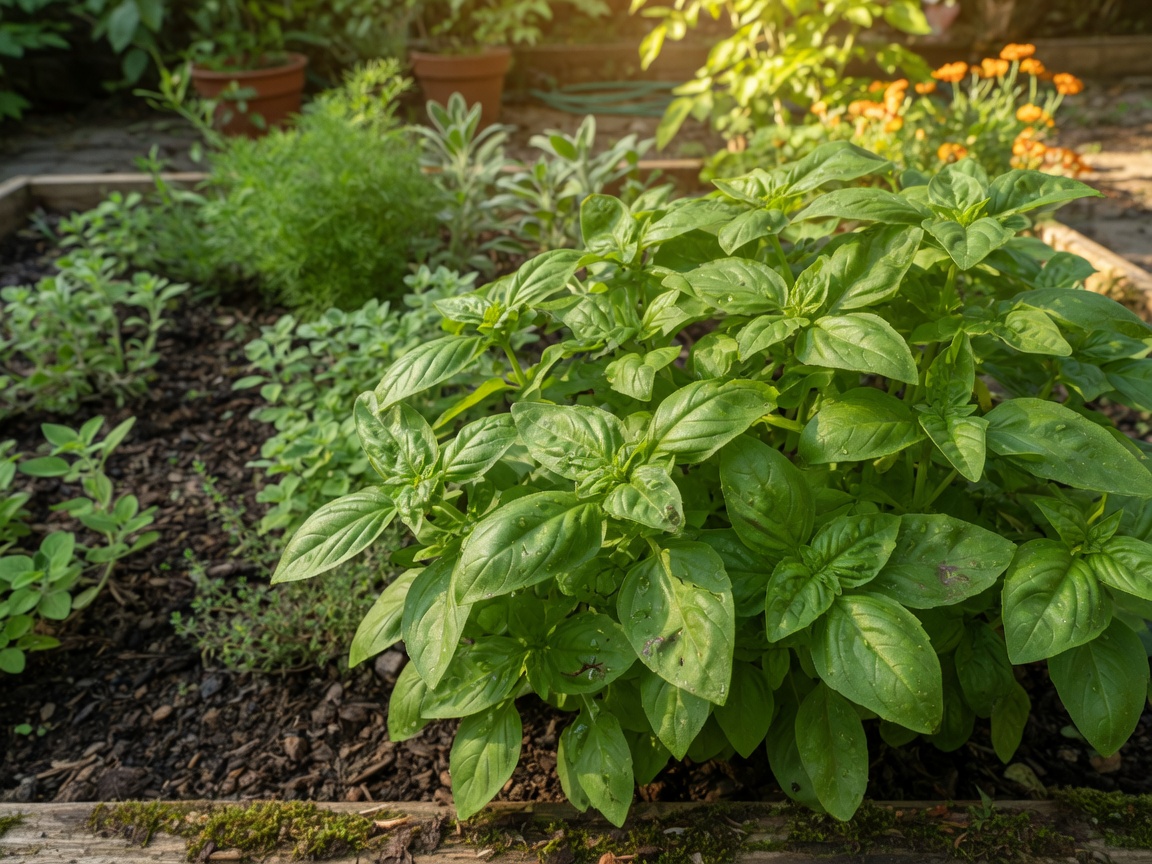
Basil
Ocimum basilicum — pesto plant, frost wimp, drama queen
- SunFull sun; light afternoon shade OK in brutal heat.
- WaterKeep evenly moist; never bone dry in heat.
- SoilRich, well-drained; pH ~6.0–7.0.
- PlantAfter frost; nights preferably >50°F.
- HarvestPinch early and often; don’t wait for a tree.
Basil will die for sport. One light frost and it’s a brown memorial to your “it’ll be fine” forecast reading skills.
One week of drought in a tiny pot and it collapses like a Victorian with the vapors—sometimes recoverable, often not.
Pinch the tops. Water the roots. Respect the cold. This is not complicated. You are making it complicated.
Sunlight
Basil wants full sun for dense, flavorful growth—typically 6–8 hours. In Kennewick’s high-summer blast, a touch of late afternoon shade can reduce wilting stress in containers, but deep shade makes leggy, bland plants.
- South/west beds are ideal once nights are warm.
- Indoor-only windowsill basil often becomes a sad stretchy stick. Lights help; neglect does not.
- Wind desiccates leaves—shelter from continuous canyon gusts if your yard is a wind tunnel with a HOA.
Soil
- Texture: loose, well-drained, high organic matter. Basil hates wet clay feet and pure sand that can’t hold water or nutrients.
- pH: about 6.0–7.0.
- Prep: mix in compost before planting. Basin soils need the organic matter more than your feelings need validation.
- Containers: quality potting mix, not yard dirt packed into a cracked plastic bucket from 2009.
Watering schedule
Basil likes evenly moist soil—not swamp, not dust. In Kennewick heat, that means more frequent attention than onions or established jalapeños.
In-ground, mulched
- Often water every 2–4 days in peak summer depending on sand content and heat, enough to wet the root zone.
- Weekly “deep soak only” can work on heavier amended soil; sandy beds need more frequent passes.
- Mulch to slow evaporation. Bare soil next to basil is how you create a daily crisis.
Containers
- Expect daily watering in July–August for small pots.
- Water until it drains, empty saucers, don’t let pots sit in hot stagnant water cooking roots.
- Wilting at noon can be temporary heat stress; wilting at 8 a.m. means you already failed overnight.
Technique
- Morning irrigation preferred.
- Water soil at the base. Chronically wet leaves overnight aren’t ideal (disease pressure is lower in dry climates, but habits still matter).
Fertilizer
- At planting: compost-rich soil; light balanced fertilizer if mix is inert.
- Ongoing: light liquid feed every 2–3 weeks if growth slows or leaves pale—especially in pots.
- Too much nitrogen: lush weak growth, sometimes less intense flavor. You’re cooking with this, not entering a leaf-size contest.
- Flush container soil occasionally if salts build (white crust + burnt leaf edges).
Planting, pinching & not letting it bolt into trash
- Timing: transplant after frost risk; basil is more cold-sensitive than tomatoes in practice. Nights in the 50s+ are safer.
- Spacing: 10–12 inches for bushy plants and airflow.
- Pinch early: when plants have several sets of true leaves, pinch above a leaf pair to force branching. One lonely unpinch stem is how you grow a flower tower with three leaves.
- Flower spikes: pinch them off unless you want seeds or pollinator art. Flowering signals the plant to get woody and less culinary.
- Succession: sow or transplant a second round midsummer so fall pesto doesn’t depend on one exhausted plant.
Frost & season end (Kennewick reality)
First fall chill will murder basil. Watch October (sometimes late September nights). Cover with row cover for light dips, or harvest the plant into pesto and freeze like someone who plans.
- Blackened leaves after a cold night are not “sleeping.” They’re dead. Cut losses.
- Move pots indoors before the cold front if you want a brief extension under lights.
Problems
- Downy mildew (more common in humid regions): yellowing patterned leaves; improve airflow, avoid overhead night wetness, choose resistant varieties if it’s a recurring nightmare.
- Aphids / spider mites: dry heat can favor mites—inspect undersides; hose off early.
- Leggy plants: not enough light or never pinched. Fix both.