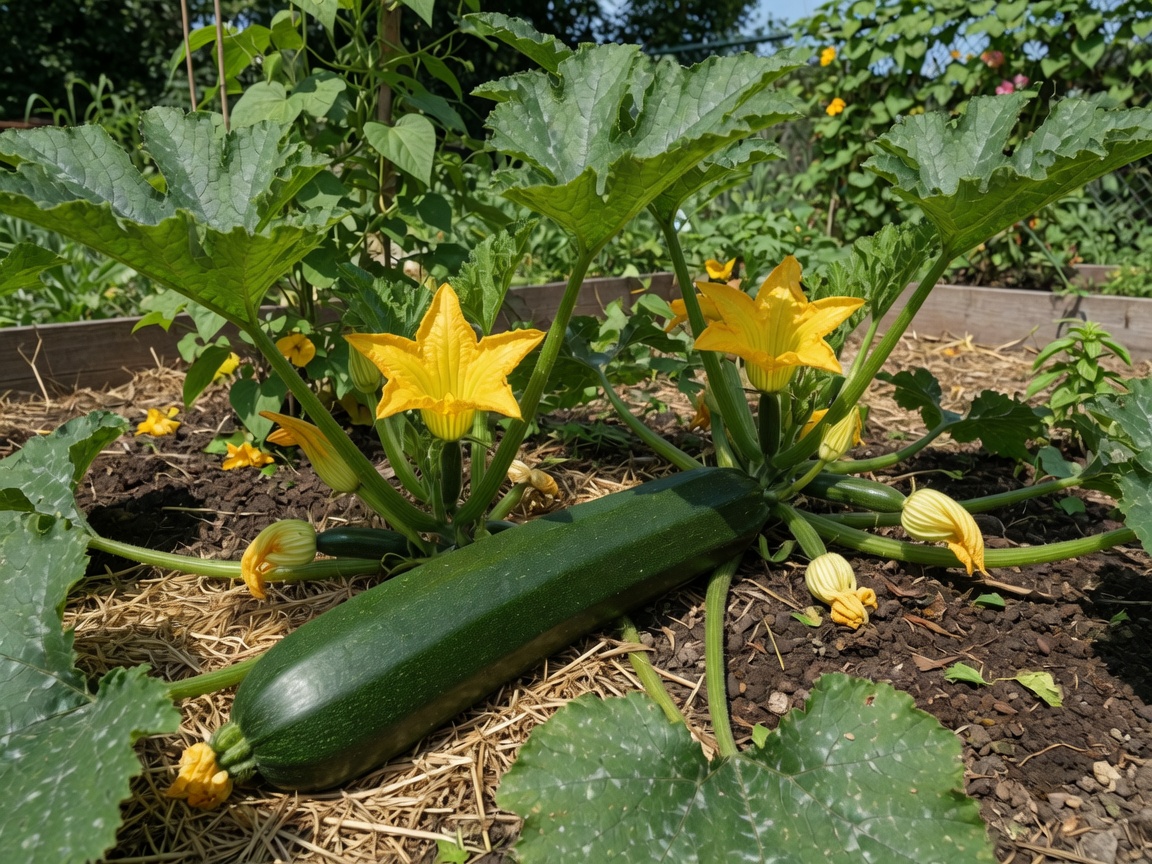
Zucchini
Cucurbita pepo — the plant that will own your refrigerator
- SunFull sun, 6–8+ hours.
- WaterDeep soaks ~1–2"/week; critical while fruiting.
- SoilFertile, well-drained, compost-loaded; pH ~6.0–7.5.
- PlantSoil ≥60°F; late Apr–June.
- YieldOne healthy plant is plenty for most households.
Plant six zucchini “just in case.” Cute. You’ll be leaving baseball bats on neighbors’ porches by August like a reverse burglar.
One or two plants, watered and fed correctly, will humble you. Space is not free. Neither is the emotional labor of shredding zucchini into everything you own.
Sunlight
Full sun. Zucchini leaves are solar panels with opinions. Less than ~6 hours and you get fewer fruits, more powdery mildew cosplay, and a plant that sprawls looking for light like it’s lost.
- Open ground beats the shade of a fence at 3 p.m. if that shade is permanent.
- Intense Basin sun is fine; sudden transplant into 100°F without hardening is not. Ease them in.
Soil
Squash are hungry. They want deep fertility and decent moisture holding without sitting in a puddle.
- pH: roughly 6.0–7.5 works; near neutral is comfortable.
- Compost: mix a generous amount into the planting zone. Planting into raw sandy Basin dirt with a pep talk yields small bitter lessons.
- Drainage: raised mounds or beds help if spring soils stay cold and wet.
- Rotation: don’t plant squash on last year’s squash graveyard if disease was ugly—move the problem, don’t re-subscribe.
Watering schedule
Fruiting zucchini drinks. Target about 1–2 inches of water per week total in summer, delivered as deep root-zone soaks. Shallow daily sprinkles grow shallow roots and invite collapse during the first real heat wave.
Stages
- Germination / seedling: keep seed zone moist until established. Crusting soil can block emergence—keep surface from turning into pottery.
- Vining / bush expansion: deep water 1–2× weekly; mulch around (not piled on) the stem.
- Heavy fruiting: do not drought-stress. Uneven water contributes to misshapen fruit, aborted fruits, and blossom-end issues under stress.
- Extreme heat weeks: extra soak or split irrigations; leaves may wilt midday even when soil is okay—check soil before panic-drowning them at noon.
Method
- Drip or soaker under the canopy is ideal—wet soil, drier leaves, fewer fungal invitations.
- If you overhead water, do it morning so foliage dries. Nighttime leaf baths are a hobby for pathogens.
- Mulch is mandatory adulting in Kennewick.
Fertilizer
- Pre-plant: heavy compost + balanced fertilizer in the bed.
- Side-dress: when plants start to run hard / first fruits set—compost tea, balanced granular, or a moderate nitrogen boost if leaves pale.
- Containers: regular liquid feeding; nutrients walk out with every watering.
- Too little food: pale leaves, weak fruit set. Too much hot fertilizer on dry roots: burn. Water first, feed second, read the label like it contains spoilers you need.
Planting & spacing
- Soil temperature: ≥60°F for direct sow. Cold soil rots seed and sulks transplants.
- Direct sow: 1 inch deep, 2–3 seeds per spot, thin to best plant.
- Transplants: start only 2–3 weeks early—big rootbound squash starts hate life.
- Spacing: bush types 24–36 inches; give them a real footprint. Crowding is how leaves stay wet and pests commute easily.
- Pollination: first fruits sometimes abort when nights are cool or pollinators are scarce. Male flowers often appear first—don’t panic and rip the plant out on day four.
Harvest (do this or drown in clubs)
- Pick at 6–8 inches for tender zucchini (variety dependent).
- Check plants every 1–2 days in peak season. They grow overnight because they hate you specifically.
- Use a knife/pruners. Twisting off fruit can damage vines.
- Giant zucchini are for stuffing, grating, or compost—not for proving you “grew something big.” Size is not skill.
Pests & disease greatest hits
- Squash bugs: hand-pick adults/eggs early mornings. Ignore early and enjoy late-season death spiral.
- Powdery mildew: common late; airflow, morning water, resistant varieties, remove worst leaves. Total defoliation means the season’s wrapping up—live with it or replant earlier next year.
- Vine borers: less famous here than in some regions, but stem collapse still warrants inspection.