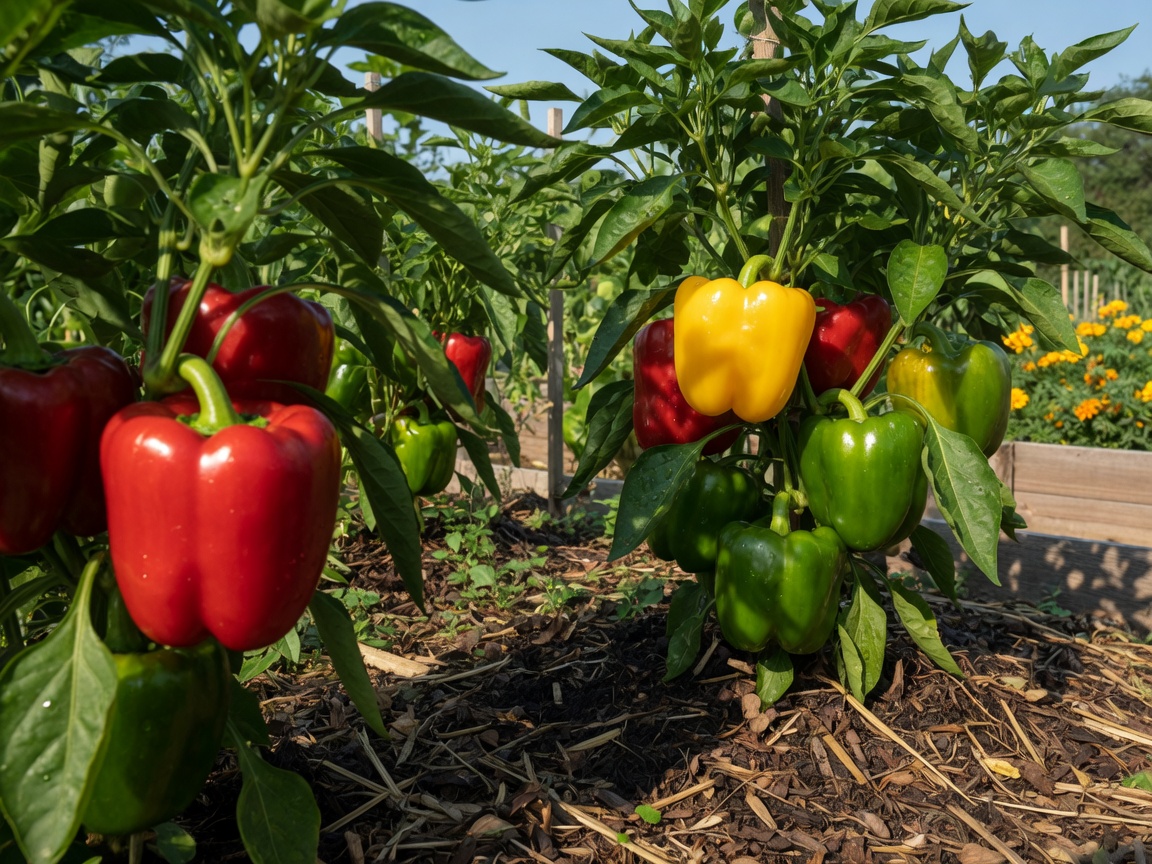
Bell Peppers
Capsicum annuum — the diva that pretends it’s tough
- SunFull sun; heat is fine once roots are happy.
- WaterEven moisture ~1–1.5"/week; no flood/drought yoga.
- SoilWell-drained, rich; pH ~6.0–7.0; warm at transplant.
- PlantTransplant late Apr–mid May after real warm nights.
- Days~60–90 from transplant to first ripe fruit (color takes longer).
Sunlight
Give bells full sun (6–8+ hours). Kennewick’s intense light is an advantage once plants are established—this is not a Seattle drizzle crop.
- Afternoon blast: mature plants usually handle Basin sun. Newly set transplants may appreciate temporary shade cloth for a few days if you planted into a heat spike like a maniac.
- Reflected heat: south walls can help early growth; they can also crisp containers. Watch pots daily in July.
- Shade = leafy sadness: fewer flowers, soft growth, late fruit. Don’t.
Soil
Peppers want warm, well-drained soil with organic matter. They hate cold, waterlogged roots and pure mineral sand with zero food.
Targets
- pH: about 6.0–7.0. Alkaline Basin soils above ~7.5 can still grow peppers with compost, but nutrient availability gets weird—soil test if leaves yellow for no obvious reason.
- Texture: loam or amended sandy loam. Add compost heavily (1–2+ inches worked in).
- Temperature: soil ideally in the 60s°F+ at transplant. Black plastic or dark mulch can warm beds earlier if you’re optimizing like an adult.
- Drainage: raised beds are excellent here—they warm faster and prevent the “I overwatered once and now it’s stem rot season” arc.
Watering schedule
Peppers reward consistency. Wild swings (bone dry → swamp → bone dry) drop blossoms, stall fruit, and invite blossom-end rot drama when calcium uptake tanks under stress.
Stage-by-stage
- Week 1–2 after transplant: keep root ball and surrounding soil evenly moist. Daily checks in heat. Don’t drown; don’t desertify.
- Vegetative growth: about 1 inch of water per week equivalent, more on sand and wind.
- Flowering & fruit set: maintain even moisture. Drought + 100°F wind = flowers on the ground and your confusion on Reddit.
- Fruit sizing: often 1–1.5 inches/week in peak Kennewick summer. Deep drip soaks beat overhead showers.
How often in practice
- In-ground, mulched, drip: typically 2 solid irrigations per week in July heat; sometimes 3 on pure sand.
- Containers: often daily in midsummer. If the pot is light and the plant sulks at 2 p.m., you already waited too long.
Water the soil, not a full leaf bath at night. Wet foliage + cool nights isn’t always fatal here (it’s dry), but base watering is still smarter.
Fertilizer
Peppers need food, but they are not corn. Early nitrogen overload grows a gorgeous green bush that forgets to date.
Program that works
- Pre-plant: compost + a balanced vegetable fertilizer worked into the bed.
- At transplant: optional dilute starter fertilizer; water thoroughly.
- After first fruits set: light feeding every 3–4 weeks (liquid feed or side-dress). Or use a quality slow-release at planting and stop obsessing.
- Potassium & phosphorus: matter for fruiting; follow a soil test if you can. Random triple-superphosphate rituals are not a personality.
Symptoms for the pattern-recognition impaired
- All leaves, few flowers: too much N, not enough light, or nights still cold.
- Yellow older leaves, weak growth: hunger, poor soil, or water stress.
- Blossom drop: heat stress, cold nights, drought, overwatering, or wild fertility swings—not “the plant hates you” (though fair).
Planting for the Basin
- Start indoors: 8–10 weeks before transplant date under actual grow lights if possible.
- Harden off: 7–10 days of gradually longer outdoor time. Skipping this is how you sunburn seedlings and then buy replacements.
- Transplant: late April to mid-May depending on year; nights preferably not crashing into the 40s repeatedly.
- Spacing: 18–24 inches between plants; rows 24–36 inches.
- Planting depth: slightly deeper than the pot is fine; don’t bury a leggy stem like a tomato unless you’ve done this before and accept the risk.
- Support: cages or stakes help when fruit loads get heavy and wind shoves plants sideways.
Harvest
- Green bells are mature for eating when fully sized and firm.
- Colored bells (red/yellow/orange) need extra time on the plant—protect from pests and don’t abandon irrigation while you wait for Instagram colors.
- Cut fruit with scissors/pruners; yanking breaks branches because physics still applies in your yard.
Pests & problems (greatest hits)
- Aphids: blast with water, encourage beneficials, or treat early—don’t wait for sticky leaf horror.
- Sunscald: fruit bleached on the sun side—healthy foliage cover helps; extreme heat waves happen.
- Blossom-end rot: often water inconsistency + calcium uptake issues, not always “no calcium in soil.” Fix watering first.