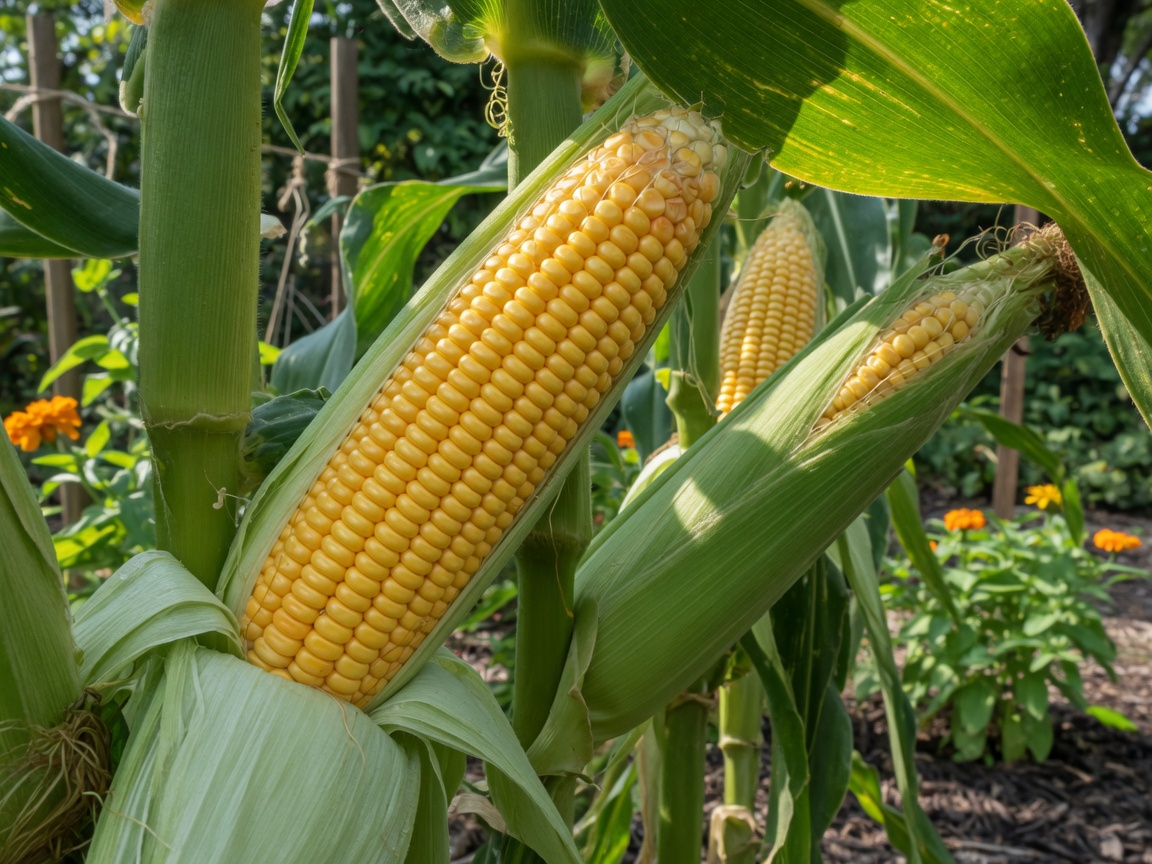
Sweet Corn
Zea mays var. saccharata — not lawn grass with ambition
- SunFull sun, 8+ hours. Shade = ornamental corn sticks.
- Water1–1.5"+ per week; critical at tassel/silk.
- SoilDeep, fertile, pH ~6.0–6.8; lots of organic matter.
- PlantLate Apr–mid Jun when soil ≥60°F; blocks only.
- Days~65–90 to harvest depending on variety.
Sunlight (this is not negotiable)
Corn is a full-sun crop. In Kennewick you have sun for days—use it. Aim for at least 8 hours of direct light. North sides of fences, under walnut-adjacent gloom, or the “cute shady corner” will produce tall-ish plants and pathetic ears.
- Site: open bed, south or west exposure if walls are involved.
- Competition: don’t tuck corn under fruit trees. Trees win. Always.
- Heat: Basin heat is fine for corn once established. Wind is the real bully—stake edges of tall blocks if gusts thrash them.
Soil: fix the dirt or farm dust
Sweet corn wants deep, well-drained soil with real fertility. Columbia Basin dirt often starts as sandy loam or loess that drains fast and holds nutrients like a sieve. Your job is to turn “construction fill cosplay” into a root zone with structure.
Targets
- pH: ideally 6.0–6.8. Local soils often run higher (alkaline). Compost helps; sulfur can nudge pH down over time if a soil test says so.
- Organic matter: work in 1–3 inches of compost before planting. Corn is a heavy feeder; barren sand grows green disappointment.
- Depth: roots go deep when you let them. Don’t plant on a hardpan plate and then wonder why stalks flop after one windy afternoon.
- Drainage: wet feet early = seed rot. Basin sand usually drains; raised beds help if your yard is weird compacted clay from a past owner’s “improvements.”
Pre-plant checklist
- Clear weeds (they will outcompete seedlings while you’re “busy”).
- Broadcast compost; fork or till shallowly—don’t pulverize soil into moon dust.
- Rake smooth; mark a block layout (example: 4 rows × 8–10 plants), not a runway strip.
Watering schedule (Kennewick edition)
Summer rain will not save you. Plan on irrigation supplying essentially 100% of crop water from June through August. Goal: roughly 1 to 1.5 inches of water per week total, applied as deep soaks, not daily sprinkles that wet the top inch and train roots to live in the death zone.
Stage-by-stage
- Germination (days 0–10): keep the seed zone evenly moist. Surface crusting on silty soil can block emergence—light raking or a gentle mist helps. Don’t flood and wash seed away.
- Early vegetative (to ~knee high): water deeply 1–2 times per week depending on heat and soil. Finger-check 4 inches down; dry = water.
- Rapid growth / pre-tassel: demand climbs. Miss water here and you shorten plants and ear potential before you even see silk.
- Tassel & silk (the boss fight): drought now = poor pollination, tip dieback, half ears. Keep soil moisture steady. This is where lazy gardeners earn empty cobs.
- Kernel fill: maintain moisture until kernels plump. Slight taper at full dent/milk stage depending on harvest timing for sweet corn.
Practical Basin schedule (starting point)
- Mild weather (70s–low 80s): deep water about once every 5–7 days.
- Hot spells (90s–100s) + wind: deep water about every 3–4 days, or split into two solid soaks per week with mulch.
- Containers / tiny beds: check daily; volume is small and heat cooks them.
Mulch between rows after plants are up (straw, leaves, chips). Bare alleyways in July are how you irrigate the atmosphere instead of the crop.
Fertilizer (feed the beast)
Corn is nitrogen-hungry. Yellow lower leaves marching up the stalk midseason is the plant texting you “N please” in botanical all-caps.
At planting
- Incorporate compost across the bed.
- Apply a balanced vegetable fertilizer per label, or a mix with decent nitrogen if soil is poor.
- If using granular, keep bands a couple inches away from seed so you don’t burn seedlings. Burned corn does not “toughen up.” It dies.
Side-dress nitrogen
- First side-dress: when plants are about 8–12 inches tall.
- Second: around knee-high, and/or just before tassel if growth still looks pale.
- Water in fertilizer. Dry prills on dry soil is how you invent fertilizer burn fan fiction.
Organic-ish options people actually use
- Blood meal, feather meal, or fish fertilizer for N boosts (follow rates—more is not smarter).
- Well-aged compost as the base program every year.
- Avoid dumping fresh hot manure at seed time unless you enjoy uneven growth and mystery microbes.
Planting & spacing (blocks or bust)
- Soil temperature: wait for ≥60°F at seed depth. Cold soil = rot and patchy stands.
- Depth: about 1–1.5 inches (slightly deeper in loose sand that dries fast).
- Spacing: 8–12 inches in the row; rows 30–36 inches apart.
- Layout: minimum useful block is roughly 3–4 rows of 6–8 plants. Bigger is better for pollination.
- Isolation: if you grow multiple sweet corn types (or super-sweet next to field/ornamental), staggered planting or distance reduces weird starchy crosses. Super-sweet types are divas about isolation—read the packet.
- Succession: plant every 10–14 days through early/mid June for staggered harvests before fall frost cuts you off.
Harvest without ruining it
- Silk browns and dries; ear feels full through the husk.
- Pierce a kernel: milky juice = sweet corn time. Clear juice = too early. Doughy = you’re late for peak sugar.
- Harvest in the cool morning. Sugar converts to starch after picking—eat or chill fast. Leaving bags of corn in a hot car is a crime against dinner.
Common Kennewick failure modes
- Poor tip fill: bad pollination (tiny block), drought at silk, or extreme heat/wind during pollen shed.
- Stunted pale plants: no nitrogen, no organic matter, or water only wetting the top crust.
- Lodging (falling over): shallow roots from lazy watering, wind, or overcrowding.
- Raccoons/birds: welcome to agriculture. Fencing and timing help; denial does not.