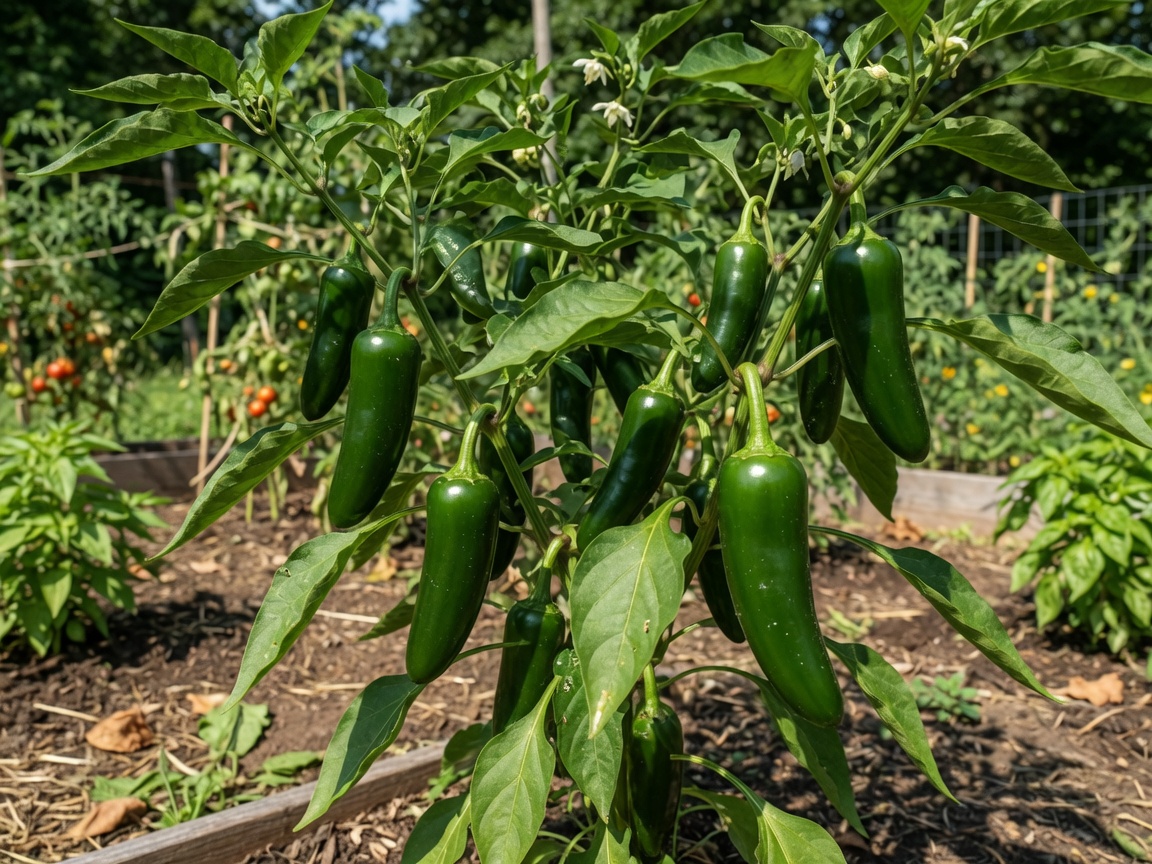
Jalapeños
Capsicum annuum — same genus as bells, fewer excuses
- SunFull sun. Heat is the point.
- Water~1–1.25"/week; even moisture for solid fruit.
- SoilWell-drained, compost-rich; pH ~6.0–7.0.
- PlantTransplant after frost risk; warm soil.
- Days~70–80+ from transplant to green harvest.
Sunlight
Full sun. Period. These are heat-adapted peppers that thrive in the Columbia Basin’s long, bright days once nights stop being rude.
- 8 hours+ of direct light for maximum fruiting.
- Partial shade grows softer plants and fewer peppers—fine if you enjoy decorative foliage and store-bought salsa.
- Reflective heat from walls/fences can boost early growth; containers still dry out faster, so don’t get cocky.
Soil
Same family rules as bell peppers: warm, drained, fertile. Jalapeños are slightly more forgiving in midsummer heat, not more forgiving of garbage soil.
- pH: roughly 6.0–7.0 ideal; amend alkaline beds with compost long-term.
- Organic matter: critical on sandy Basin lots—compost improves water holding so you’re not irrigating every emotional breakdown.
- Mulch: 2 inches after soil is warm. Holds moisture, blocks weeds, reduces the “baked crust” special.
- Containers: use a large pot (5+ gallons) with quality mix. Tiny nursery pots in July are plant cruelty.
Watering schedule
Aim for even moisture at about 1–1.25 inches per week in-ground once established, rising in extreme heat or sand. Slight stress can sometimes intensify heat in chiles, but chronic drought just makes woody plants and fewer marketable pods. You’re not running a research trial. Water them.
Stages
- Transplant establishment: never let the original root ball dry into a brick while the surrounding soil stays wet. Water the whole zone.
- Pre-flower: steady moisture; deep soaks 1–2× weekly with mulch.
- Flowering / fruiting: keep even. Wild dry-downs drop blossoms. Overwatering in cold soil early on invites root issues.
- Peak July–August: check soil mid-week every week. Wind + 100°F is a moisture thief.
Simple rule
Finger test 2–3 inches down. Dry? Water deeply until the root zone is wet, then stop. Wet and muddy? Walk away. Your anxiety is not a moisture meter.
Fertilizer
- At planting: compost + balanced fertilizer in the bed.
- Midseason: light feed every 3–4 weeks after fruit set, or slow-release at transplant.
- Don’t: pump pure nitrogen all June and wonder why you have a hedge with three peppers.
- Pots: nutrients leach—use regular diluted liquid feed every 1–2 weeks during active growth, or controlled-release granules.
If leaves are deep green, plants are flowering, and fruit is setting, stop “improving” things. Tinkering is how people create problems for content.
Planting & care
- Start indoors 8–10 weeks before outdoor transplant.
- Transplant late April–mid May when frost risk is low and soil is warm.
- Spacing: 18–24 inches apart.
- Support: optional but useful when loaded with fruit and wind kicks up off the river flats.
- Harvest green when pods are firm and full-sized, or wait for red for sweeter heat and different flavor. Continuous picking encourages more fruit.
Heat, stress & your face
- Wear gloves if you are the person who rubs their eyes. Capsaicin does not care about your learning style.
- Corking (small surface cracks) on pods is often normal and can indicate maturity—not necessarily disease.
- Extreme heat may pause flowering temporarily; keep water steady and wait. Panic-fertilizing mid-heatwave is not a cool-down strategy.
Why Basin gardeners love these
Long sunny days + irrigation control = excellent chile country. Jalapeños are one of the easier peppers to look competent with—if you transplant warm, mulch, and water like you meant to grow food.