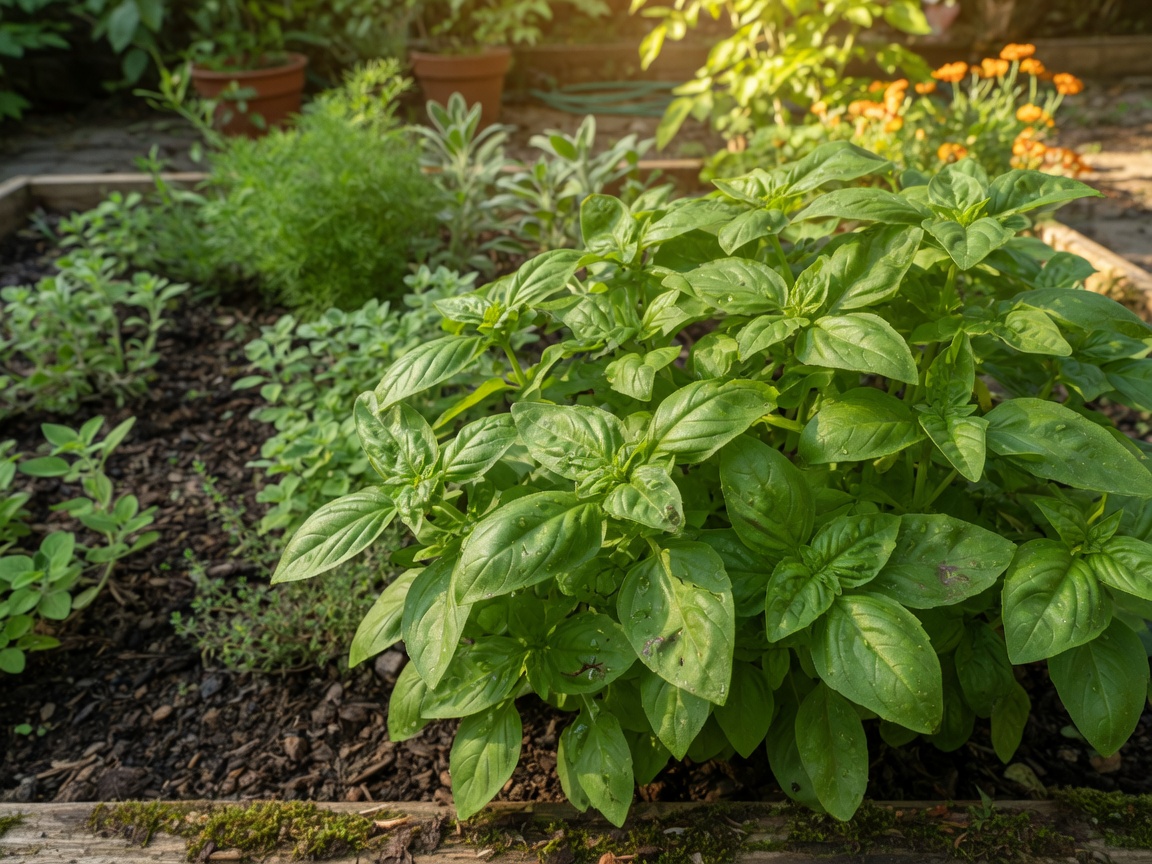
The short checklist
- When: Outside only after nights are reliably mild -- usually May. Basil treats a cold snap like a personal insult.
- Sun: Full sun, 6-8+ hours. Basin light is plenty; wind-dried pots are the trap.
- Soil: Rich, drained, evenly moist. Compost in. Not swamp, not dust.
- Water: Even moisture. Containers in Kennewick wind may need daily checks in July heat.
- Harvest: Pinch tips above a leaf pair often. Flowers are a yield tax -- remove spikes.
- Frost: One hard frost and it is a eulogy. Cover or move pots.
How to actually do this
Start indoors 4-6 weeks before warm nights, or buy bushy starts. Harden off gently -- tender leaves burn and chill easily. Plant into warm soil with compost, water in, and mulch lightly once established so irrigation does not flash-dry.
Pinch growing tips so plants branch into a leaf factory instead of one tall flower stick. Treat pinching as harvest: take what you need for the kitchen and reshape the plant at the same time. In Columbia Basin heat, basil can be excellent if moisture stays even; drought makes bitter, sulky leaves and early flowering.
Keep a row cover or moveable pots ready for late-May or mid-October surprises. Basil is not "almost frost hardy." It is a warm-season annual with a short memory and no cold insurance.
Top ways people mess this up
- Chilly-night transplant. Blackened leaves overnight. Not sleeping -- dead.
- Never pinching. One tall flower stick with three leaves and a lot of regret.
- Drought cosplay in pots. Victorian vapors daily. Check soil; water evenly.
- Assuming Basin sun alone grows dinner. Sun without water is jerky, not pesto.
Field notes
- Chilling-sensitive: hardened-off is not frost-tolerant.
- Tip pruning builds branching and leaf yield; flowering shifts allocation away from quality leaves.
- High ET and wind desiccate containers faster than westside gardens -- volume and mulch matter.
- Movable containers are a valid frost hedge for Kennewick shoulders.
- Succession midseason beats nursing one woody, flowered plant into October mediocrity.
Crop biology
Ocimum basilicum is a tender tropical-leaning annual that wants high light, warm nights, and even moisture. Apical dominance keeps a single leader unless you tip-prune; pinching terminals releases laterals and multiplies harvestable nodes. Once flowering accelerates, leaf quality and aroma often decline as the plant reallocates to seed. Continuous vegetative harvest is the production system -- not "let it go to flower for the bees" if pesto is the goal.
Sunlight & airflow
Full sun is correct for Kennewick. Six hours is workable; deep shade makes lanky, low-flavor growth. Airflow helps after irrigation, but exposed windy corners strip moisture from leaves and pots. A sunny, watered site with a wind break (fence, shrub, building) often outperforms an open desert patio that looks dramatic and drinks hourly.
Soil
Loose, fertile, well-drained media with finished compost. Target roughly pH 6.0-7.0. Alkaline native soils still grow basil if organic matter and moisture are managed; do not drown roots in tight clay pockets. Raised beds and large containers are excellent for season control and frost mobility.
Irrigation
Even moisture -- neither swamp nor dust. In-ground plants: deep water when the top inch dries, more often in 95-105F weeks. Containers: check daily in peak heat and wind; undersized nursery pots fail first. Mulch reduces flash drying. Wilted-recover cycles stress flavor and push flowering.
Fertilizer
Modest fertility. Compost at planting; light liquid feed every few weeks in containers that leach. Excess nitrogen makes soft, lush growth that still dies at 32F -- fertility does not buy frost tolerance. Pale plants in dry pots need water before fertilizer theater.
Kennewick / Columbia Basin timing
- Indoor sow: April, about 4-6 weeks before warm nights.
- Transplant out: May once nights stay mild; do not rush on one warm afternoon.
- Peak leaf: June through early September with pinch-harvest discipline.
- Succession: optional second planting midsummer if first plants flower out or get woody.
- End: first frost ends the crop -- often September nights in cold pockets, more often into October on warm lots. Cover or harvest hard ahead of forecasts.
Training, pruning & disease hygiene
Pinch above leaf pairs regularly. Remove flower spikes on sight for leaf production. Thin crowded interiors if fungal spotting appears after wet foliage events. Avoid chronic overhead watering in evening. Discard plants with severe downy-type collapse rather than "waiting it out" into neighbor pots.
Pests & disorders
Aphids on soft tips, spider mites in hot dry stretches, occasional leafhoppers, cold damage (blackened tissue), and root stress from drought or pot-bound media. Japanese beetles are less of a westside story here; mites and desiccation are the Basin headline. Capsaicin is not involved -- that is the jalapeno page -- but soapy water and a hose blast still solve many aphid days.
Harvest & postharvest
Harvest in the cool of morning when possible. Use fresh, or keep stems in water briefly. Refrigeration can blacken leaves; for storage, pesto freeze is the grown-up move. Frequent light harvests beat rare scalpings.
Unit close
Warm nights, full sun, even water, pinch as harvest, respect frost. Basin heat grows great basil. Neglect and cold nights cancel the syllabus.