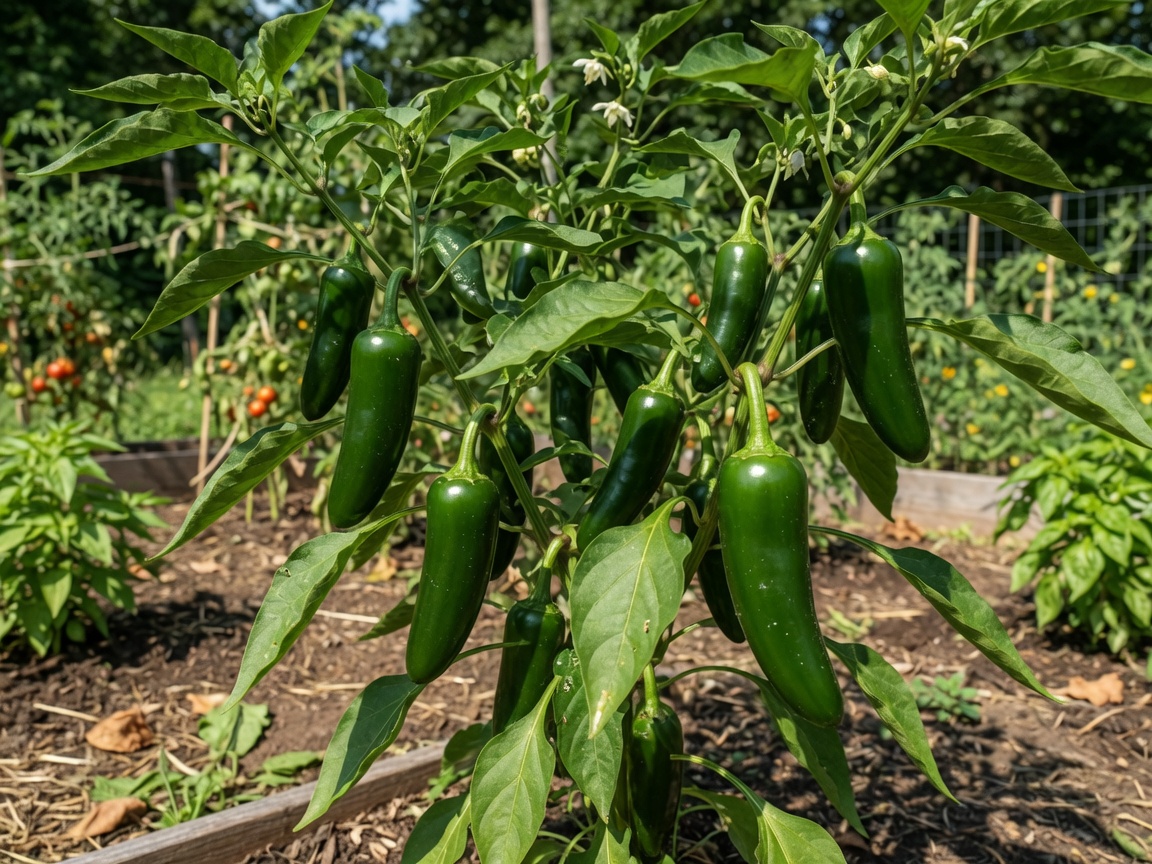
The short checklist
- When: After frost risk into warm soil -- late April to mid-May typical.
- Sun: Full sun. Heat is the point; Kennewick is jalapeno country if you irrigate.
- Soil: Compost-rich, drained; mulch when warm.
- Water: Even moisture, about 1-1.25 inches per week. Drought cuts yield more than it "boosts heat."
- Harvest: Green when firm and full size, or wait for red. Pick steadily.
- Pots: 5+ gallons; check often in heat. Gloves if you rub your eyes afterward.
How to actually do this
Same broad playbook as bells with more midsummer forgiveness once established. Start indoors 8-10 weeks out or buy sturdy starts. Harden off, plant into warm soil at 18-24 inch spacing, water in, mulch, and keep a drip line honest through July and August.
Basin summers are excellent chile weather -- high light, heat units, low humidity relative to the westside. That is not permission to treat plants like cactus. Cultivated jalapenos still need continuous root moisture for yield. Continuous picking keeps plants producing instead of sitting on a few oversized pods.
Corking (small brown surface lines) on pods is often maturity, not disease. Capsaicin on skin and gloves is real -- wash before contact lenses and life decisions.
Top ways people mess this up
- Heat lover mistaken for frost cosplayer. Cold April starts sulk until July.
- Nursery-pot prison. Tiny volume in 100F is a death sentence.
- The eye incident. Capsaicin does not negotiate. Gloves or surgical washing.
- Drought as a flavor strategy. Chronic water stress shrinks yield; it does not reliably make "better" heat.
Field notes
- More heat-tolerant than bells once established; still fails cold soil starts.
- Chronic drought cuts yield more than it improves heat -- stress is not a spice rack.
- Corking on pods is often maturity, not pathology.
- Continuous harvest maintains sink demand and keeps plants reproductive.
- Basin irradiance plus wind demands mulch and real container volume.
Crop biology
Jalapenos are Capsicum annuum chile types selected for thick-walled, medium-heat fruit. Capsaicinoids concentrate in placental tissue; stress and genetics both influence perceived heat, but irrigation neglect is a poor substitute for variety choice. Plants are warm-season perennials grown as annuals here; flowering and fruit set continue while nights stay mild and roots stay functional.
Sunlight & airflow
Full sun is non-negotiable for serious yield. Airflow helps after watering. Wind-exposed sites need staking when laden and larger pots if container-grown. Partial shade produces lanky plants and fewer pods -- decorative, not salsa-scale.
Soil
Drained, compost-amended soil, pH roughly 6.0-7.0. Raised beds warm early and drain -- good match for chiles on alkaline Basin lots. Avoid chronically wet low spots. Mulch after soil warms to stabilize moisture and cut dust splash.
Irrigation
Even moisture via drip. About 1-1.25 inches weekly as a baseline; increase in extreme heat. Do not chase "spicy drought" myths into collapsed yield. Fruit set and sizing need continuous water. Containers: check daily in peak summer.
Fertilizer
Moderate. Compost at planting; light feed after set. Excess early nitrogen delays fruiting. Container leaching means dilute feed more often than in-ground beds.
Kennewick / Columbia Basin timing
- Indoor sow: late February to March.
- Transplant: late April to mid-May warm soil.
- Green harvest: often July onward with good starts.
- Red ripe: late summer into fall with continued care.
- Frost: tender -- strip fruit before hard freeze.
Training, pruning & disease hygiene
Stake if wind and fruit load require it. Remove damaged or diseased wood. Keep fruit off bare hot soil when plants sprawl. Harvest with snips to protect branches.
Pests & disorders
Aphids, spider mites in hot dry weather, flea beetles on soft transplants, blossom drop under water/temp extremes, sunscald on exposed fruit. Cultural control first. See pests.
Harvest & postharvest
Pick green for classic use, or red for sweeter/hotter profiles depending on fruit. Refrigerate short-term; freeze, pickle, or ferment for storage. Wash hands and tools. Do not touch eyes. This is not a metaphor.
Unit close
Warm start, full sun, even water, pick steadily, respect capsaicin. Basin heat is the MVP climate -- irrigation is the coaching staff.