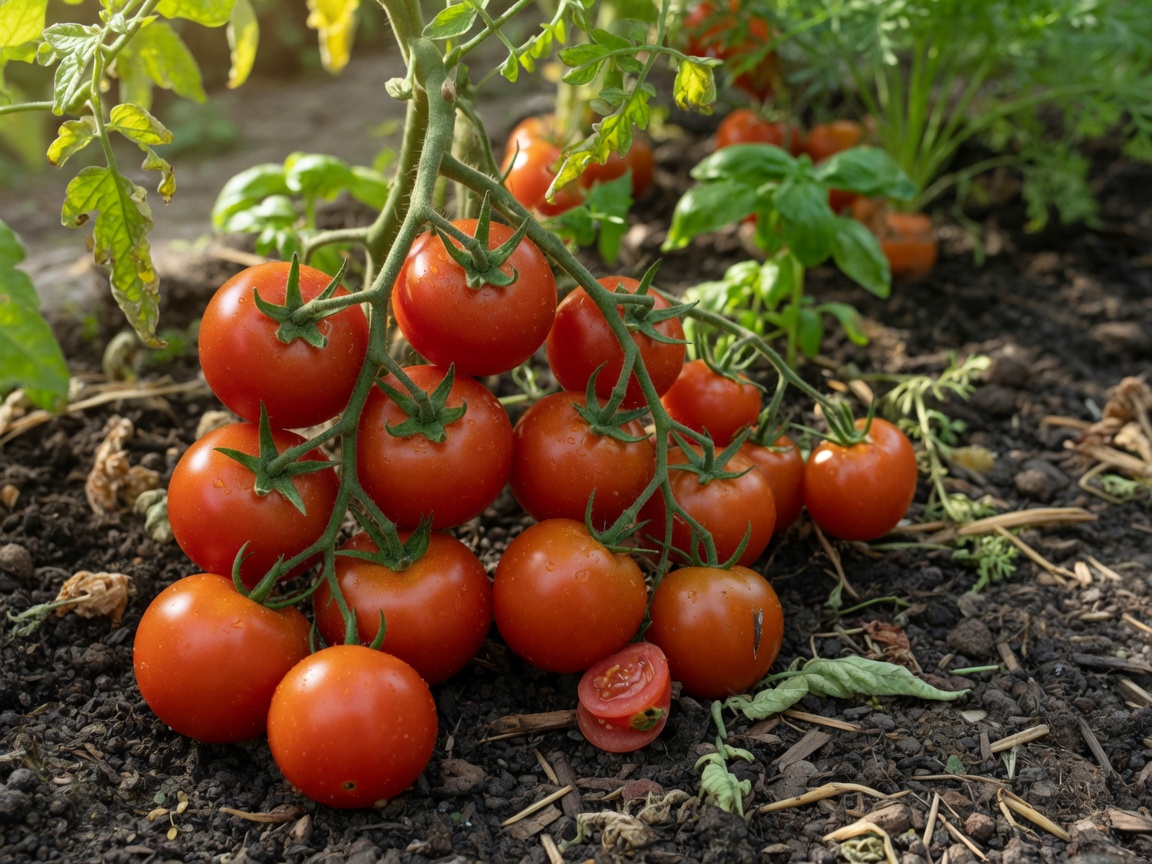
The short checklist
- When: Late April to mid-May into warm soil after harden-off. Starts go in when nights stop flirting with frost.
- Sun: Full sun. Basin light is abundant; use it. South or west exposures win.
- Soil: Rich, drained, composted bed. Mulch after soil warms. Alkaline native dirt needs organic matter and realism, not wishing.
- Water: Even deep moisture. Roughly 1-1.5 inches per week, more in 100F weeks. Drip at the base beats overhead theater.
- Support: Cage or stake at planting -- not after the octopus phase.
- Harvest: Color plus slight give. Strip quality fruit before hard frost (often mid-October here).
How to actually do this
Start seed indoors 6-8 weeks before plant-out, or buy stout nursery starts. Harden off for a week so sun and wind do not shock transplants. Plant deep enough to bury part of the stem (roots form along buried stem). Water in thoroughly, install support the same day, and mulch once soil is warm so irrigation stays where roots live.
Kennewick heat units are a genuine gift for ripening -- the failure mode is not "cool summer blues," it is skipping irrigation until fruit cracks or BER shows up. Probe the root zone. Deep soak on a schedule; do not mist leaves for vibes. After first fruit set, a light feed is fine if plants look pale. Pick steadily so plants keep setting.
Wind corridors matter: tall indeterminate vines without stakes become ground-level disease and dust magnets. Determinate types still appreciate a cage. In July heat spikes, consistent moisture beats heroic weekend flooding.
Top ways people mess this up
- Cold-mud optimism. One sunny April day and you are a pioneer. Plants sit for weeks while neighbors fruit. Warm soil. Wait.
- Flood-to-drought tango. Wild swings crack fruit and invite blossom-end rot. Consistency beats heroics.
- Support as afterthought. Wrestling a cage onto a horizontal plant is optional comedy. Stake day one.
- Assuming desert = no water needed. Tomatoes are not sagebrush. Basin rainfall will not carry July.
Field notes
- Heat units favor ripening in the Columbia Basin; water continuity is the bottleneck, not degree-days.
- Determinate vs indeterminate changes pruning load, support, and harvest window length.
- Blossom-end rot is often calcium transport under irregular moisture -- not always bulk soil Ca deficiency.
- High irradiance plus aggressive defoliation equals sunscald on exposed fruit.
- Rotate nightshades when space allows; alkaline, low-OM soils punish shallow fertility theater.
Crop biology
Solanum lycopersicum is a warm-season nightshade. Fruit set fails under cold nights, extreme heat paired with drought, and radical wet/dry swings. Flower fertilization and early fruit expansion are moisture-sensitive; swings produce cracking and distal Ca disorders even when soil calcium looks fine on a lab sheet. Indeterminate types keep vegetative and reproductive sinks active until frost; determinate types concentrate set into a shorter window -- useful if you want canning batches, less useful if you want October salad fruit.
Basin summers deliver the heat tomatoes write love letters about. That does not erase transplant chilling risk in April or the need for root-zone continuity when ET rates spike in July and August.
Sunlight & airflow
Target full sun -- typically 8+ hours is easy on open Kennewick lots, harder under patio roofs and north walls. Map afternoon wind: plants need airflow to dry dew and reduce foliar disease, but unsupported vines in open fetches become sailboats. Space for light into the canopy; avoid packing cages so tight that interiors stay humid after irrigation.
Lab note: Reflective south walls help early season. Shade cloth is rarely the first tool here -- water and support are.
Soil
Deep, well-drained loam or amended raised beds. Work finished compost into the top 8-10 inches. Native Basin soils often trend alkaline and low in organic matter; compost and mulch beat annual sulfur superstition as the first move. Aim roughly pH 6.0-7.0 for nutrient availability. Rotate off recent tomato/potato ground when you can. Mulch after soil warms to cut evaporative loss and buffer the moisture swings that crack fruit.
Irrigation
Assume irrigation supplies nearly all midsummer water. After establishment, deep irrigate to wet roughly 8-12 inches, typically 1-2 times weekly depending on heat, wind, and soil texture. Uniformity matters more than heroic spikes: wet/dry oscillation is the classic crack and BER recipe. Drip or soaker at the base. Overhead evening watering is how you audition foliar pathogens. Containers in Basin wind often need daily July checks and larger volumes (15-20+ gallons preferred).
Lab note: "It felt humid" is not a root-zone reading. Probe the soil.
Fertilizer
Moderate fertility. Compost at planting; avoid high-nitrogen dumps that rebuild jungle without fruit. After first fruit set, a balanced or potassium-aware fruiting feed used sanely is fine. Side-dress only on real deficiency -- pale plants that are also underwatered need water first. Excess early N delays fruiting and makes wind lodging worse.
Kennewick / Columbia Basin timing
- Indoor sow: early to mid-March, about 6-8 weeks before plant-out under real lights.
- Transplant: typically late April to mid-May when soil is warm; earlier only with proven protection.
- Last frost average: around mid-April -- verify on your microclimate; hollows differ from benches.
- Peak harvest: July through September with heat banking; keep picking to maintain set.
- Season end: first hard frost often near mid-October; strip quality fruit ahead of it. Green leftovers are fried-green material, not a personality.
Training, pruning & disease hygiene
Install tall cages or stakes at planting. For indeterminates, remove suckers selectively for a cleaner system, or at minimum strip soil-contact leaves and open the interior for drying after irrigation. Do not defoliate into sunscald -- Basin irradiance is not Cascade gloom. Remove symptomatic foliage promptly; latency is not a plan. Sanitize tools between diseased plants if early blight or similar shows up.
Deeper: BER physiology
Calcium moves with the transpiration stream into expanding fruit. Under drought, root stress, or wild wet/dry cycles, distal blossom-end tissue can be Ca-deficient even when soil Ca tests adequate. Fix irrigation uniformity and mulch before buying another foliar calcium spray ritual.
Pests & disorders
Hornworms (handpick), aphids, flea beetles on soft transplants, spider mites in hot dry stretches, fruit cracking, blossom-end rot, sunscald, and occasional foliar fungal complexes when overhead watering or dense canopies stay wet. IPM order: culture, physical, biological, labeled chemistry last. See the pests system page. Wind abrasion and dust are underrated Basin stressors -- mulch and support reduce both.
Harvest & postharvest
Pick at full color with slight give for peak flavor. Room-temperature ripening of mature green fruit works if frost threatens. Refrigeration mutes volatiles; use it for storage after peak, not as a flavor strategy. Peak season: harvest every 1-2 days on cherry types, every few days on slicers. Cracked fruit: eat same day.
| Symptom | Think first | Move |
|---|---|---|
| Blossom drop | Temp extremes / water stress | Stabilize irrigation; wait out heat spikes |
| BER | Irregular moisture | Even water, mulch, check roots |
| Cracking | Dry then wet at ripe | Consistency; pick promptly |
| Sunscald | Sudden leaf loss / overprune | Keep canopy; moderate pruning |
Unit close
Warm transplant, support day one, mulch, even irrigation, moderate fertility, frost-aware harvest. Basin heat is the gift. Water continuity is how you unwrap it.