The short checklist
- When: Transplant late April to mid-May into warm soil. Cold mud is a pause button, not a growth hack.
- Sun: Full sun, 6-8+ hours. Kennewick delivers; patio shade does not.
- Soil: Rich, drained compost bed. Mulch when soil is warm.
- Water: Even moisture, about 1-1.5 inches per week -- more in extreme heat and wind.
- Feed: Compost at plant; light feed after fruit set. Early pure nitrogen grows salad plants with three peppers.
- Support: Stake when fruit load and Basin wind demand it.
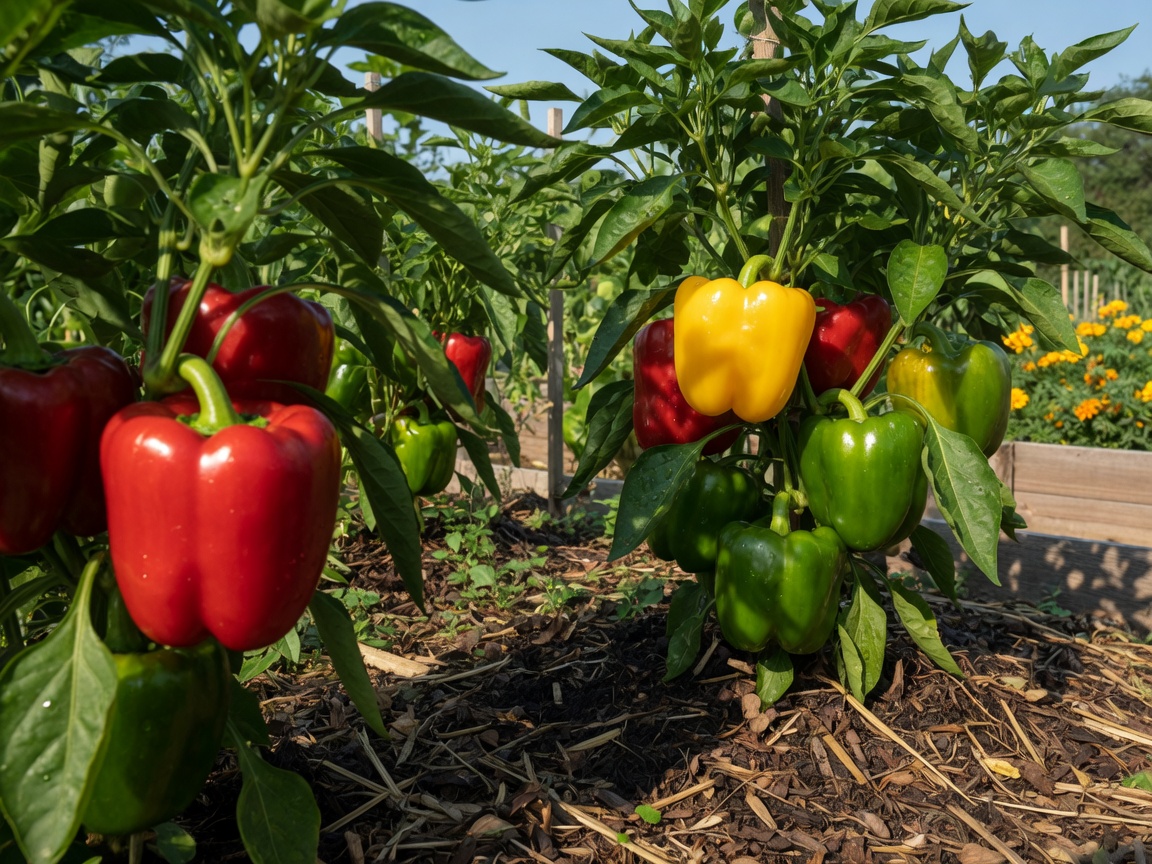
- Harvest: Green at full size is dinner. Color is extra hang time if pests and schedule cooperate.
How to actually do this
Start indoors 8-10 weeks before plant-out under strong lights, or buy thick-stemmed starts. Harden off for a week. Plant 18-24 inches apart into warm soil, water in, mulch after establishment, and keep moisture even while blossoms and small fruit set.
Columbia Basin summers are excellent pepper weather once plants are established -- heat units that westside gardens envy. The classic Kennewick failure is transplanting into chilly April soil, watching green sticks sulk until July, then overfeeding nitrogen in panic. Warm soil first. Then consistency.
Pick green when fruits are full size and firm, or wait for red/yellow/orange if you accept longer exposure to sunscald, sunburn of fruit shoulders, and pest interest. Continuous light harvesting on productive plants often beats waiting for every fruit to color.
Top ways people mess this up
- Chilly-soil cosplay. Expensive green sticks until July. Warm soil is the gate.
- Nitrogen as personality. All leaves, few peppers. You threw a salad party and skipped fruit.
- Guilt-watering pots. Bone dry, then swamp, then crispy. Big pot, daily July checks.
- Ignoring wind. Laden plants without stakes snap or sprawl into dirt and sunburn.
Field notes
- Night temps and soil warmth gate establishment more than frost stickers alone.
- Blossom drop is multi-factor: cold nights, extreme heat with drought, water swings, fertility chaos.
- Early excess N delays fruiting and builds wind-catching canopy.
- Color stage needs hang time plus continued irrigation discipline -- not neglect "to ripen."
- Alkaline, low-OM Basin soils need compost more than they need folklore micronutrient sprays.
Crop biology
Capsicum annuum (sweet bells) is chilling-sensitive at transplant. A plant that "survives" cold mud may remain stunted for weeks -- lost heat units you cannot fully refund even in a Kennewick July. Flowers set fruit under adequate light, moderate stress, and continuous root function. Green harvest is physiologically fine edible fruit; color change is ripening of mature fruit with carotenoid development, requiring time on the plant and continued plant health.
Sunlight & airflow
Full sun. Partial shade delays and reduces set. Airflow reduces foliar issues after irrigation, but open wind fetches dry pots and abrade leaves -- stake and mulch. Fruit facing sudden full exposure after leaf loss can sunscald under Basin irradiance; keep a reasonable canopy.
Soil
Well-drained, compost-amended beds. Target pH roughly 6.0-7.0. Work organic matter into the top 8 inches. Raised beds warm earlier in spring -- useful for peppers. Avoid waterlogged corners; peppers hate wet feet almost as much as cold feet.
Irrigation
Consistency over volume spikes. Drip at the base to wet the root zone; about 1-1.5 inches weekly as a starting point, scaled up in 100F windy weeks. Blossom drop and tip disorders track moisture chaos. Containers leach and heat -- plan 5+ gallon volumes minimum, larger is kinder.
Fertilizer
Moderate program. Compost at planting. After fruit set, light balanced feed. Avoid early high-N pushes. Pale plants: confirm water and root health before stacking fertilizer. Container plants need more frequent dilute feeding because of leaching.
Kennewick / Columbia Basin timing
- Indoor sow: late February to mid-March (8-10 weeks pre plant-out).
- Transplant: late April to mid-May into warm soil; protect if a late frost threatens.
- First green fruit: often mid to late summer depending on start quality.
- Color harvest: late summer into fall while nights remain cooperative.
- End: strip fruit before hard frost (often mid-October). Plants are tender.
Training, pruning & disease hygiene
Stake or cage before fruit weight and wind argue. Light pruning to remove damaged wood is fine; heavy topiary is unnecessary. Strip leaves touching soil. Remove fruit with severe sunscald or rot promptly. Do not overhead-water at dusk.
Pests & disorders
Aphids, flea beetles on soft transplants, spider mites in hot dry spells, blossom drop, sunscald, and occasional blossom-end disorders under irregular water. Pepper weevil is not the local default drama; cultural water and start timing matter more. See pests.
Harvest & postharvest
Cut or snip fruit to avoid breaking branches. Green bells store refrigerated for days to a couple weeks. Colored peppers are sweeter and often shorter-lived. Handle gently -- bruised shoulders rot faster in warm kitchens.
Unit close
Warm soil, harden-off, even water, moderate feed, harvest green or color with eyes open. Basin heat is the ally. Cold starts and N jungles are the self-owns.