The short checklist
- When: Late April to mid-June when soil is about 60F or warmer.
- Sun: Full sun, 8+ hours. Open Basin lots excel; shade does not.
- Soil: Rich composted bed -- heavy feeder, especially on sandy or low-OM ground.
- Water: Deep soaks about 1-1.5 inches per week; never drought at tassel and silk.
- Layout: Block of short rows, not one sad strip. Wind pollination needs neighbors.
- Feed: Side-dress nitrogen at knee-high and pre-tassel if pale.
- Harvest: Silk browns, kernels milk -- then eat soon. Sugars fade fast.
How to actually do this
Work compost into a sunny bed. Sow 1-1.5 inches deep, 8-12 inches apart, rows about 30-36 inches apart, in a block of at least several short rows. Keep the seedbed moist until emergence. Water deeply as plants grow. At tassel and silk, irrigation is non-negotiable -- drought here means tip dieback and husks full of disappointment.
Succession every 10-14 days if you want more than one chaotic weekend of corn. Kennewick heat units finish sweet corn reliably when water and nitrogen keep up; the climate is not the villain. Sparse planting and silk-season neglect are.
Basin wind plus shallow watering equals lodging risk. Deep roots from deep irrigation stand better when the afternoon blow arrives.
Top ways people mess this up
- Decorative runway planting. Six stalks in a line look intentional and pollinate like a ghost town. You built a pollen desert, then blamed the seed.
- Ghosting the hose at silk. Silk does not do rain checks in July.
- Starving it on Basin sand. Yellow lower leaves are a memo, not fall colors. Skip N and you grow baby ears for a tea party.
- One sowing only. Then wonder why August is all stalk and memory.
Field notes
- Contiguous pollen cloud required; sparse plantings fail silk capture.
- Soil about 60F at seed depth gates stand establishment.
- N demand peaks mid-vegetative through pre-tassel; split applications on sand and low-OM soils.
- Critical moisture: tassel/silk and early kernel fill -- irrigation supplies essentially all of it here.
- Basin wind plus shallow roots equals lodging risk.
Crop biology
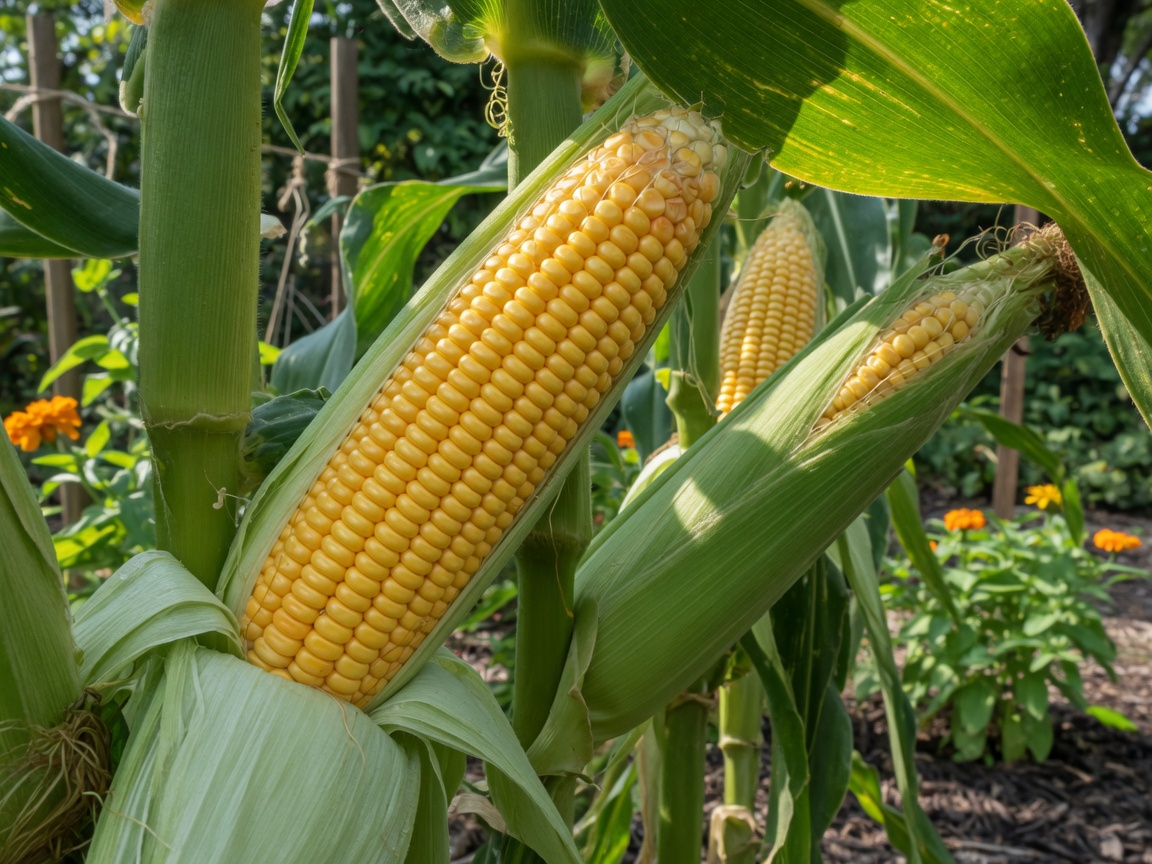
Sweet corn (Zea mays) is monoecious and wind-pollinated. Tassel sheds pollen; each silk is a potential kernel. Incomplete pollination leaves blank tips. Ear potential is partly set during vegetative growth; kernel number is fixed by pollination success. Drought at silk permanently caps fill -- you cannot refund missing kernels with late fertilizer theater. Super-sweet types need isolation from other corn pollen types if quality matters.
Sunlight & airflow
Full sun is mandatory. Blocks create better pollen density than single-file rows of equal plant count. Air moves pollen -- good -- and also lodges shallow-rooted plants -- manage irrigation depth. Do not plant the only corn block in the windiest alley without support from planting density and root depth.
Soil
Fertile, drained loam or amended beds. Compost pre-plant. Target pH roughly 6.0-6.8 for nutrient availability; alkaline Basin soils still produce if organic matter and N are managed. Avoid crusty seedbeds that block emergence -- keep moist until up.
Irrigation
Assume irrigation supplies essentially 100% of summer water. Deep soaks 1-2 times weekly with mulch where practical beat daily sprinkles. Germination needs even surface moisture; silk and early fill need continuity. Critical deficit at silk equals blank tips that no later kindness repairs.
Lab note: Probe the root zone at silk. Calendar watering without soil checks is optimism cosplay.
Fertilizer
Compost pre-plant. Side-dress nitrogen at about 8-12 inches tall and again pre-tassel if leaves pale -- especially on sandy or low-OM ground. Split N beats one heroic dump. Micronutrient folklore does not replace bulk N when lower leaves yellow from hunger.
Kennewick / Columbia Basin timing
- First sow: late April when soil is warm enough -- not just air.
- Successions: every 10-14 days through mid-June for staggered harvest.
- Silk window: midsummer depending on sowing; guard water then.
- Harvest: often July through September across successions.
- Last useful sow: mid-June-ish for most home gardens before fall risks dominate.
Training, pruning & disease hygiene
No pruning ritual. Remove tillers only if you have a specific reason -- usually not worth the hobby. Keep weeds down early. Remove smut galls if they appear and dispose away from the bed. Do not overhead-water late day into dense foliage for fun.
Deeper: pollination geometry
Minimum useful home block is about 3-4 rows by 6-8 plants. A square or rectangle beats a long single file of the same plant count because pollen density at silk height matters.
Pests & disorders
Corn earworm (silk timing, mineral oil folklore has limits), aphids, cutworms on seedlings, smut in some years, lodging from wind plus shallow roots, blank tips from pollination/drought. Birds may sample ripe ears -- harvest promptly. See pests.
| Symptom | Think first | Move |
|---|---|---|
| Blank tips | Pollination / drought at silk | Block size, irrigation log |
| Pale lower leaves | N deficiency | Side-dress history |
| Lodging | Shallow roots, wind | Irrigation depth |
| Poor germination | Cold soil / crust / dry seedbed | Wait for warmth; keep moist |
Harvest & postharvest
Pick when silks brown and kernels spray milky juice. Eat same day when possible -- sugars convert after harvest, especially on older sugary types. Refrigerate if you must delay. Staggered sowings beat one giant boil-and-freeze panic.
Unit close
Warm soil, pollination block, deep stage-based water, split nitrogen, harvest at milk. Basin heat finishes corn. Silk-season irrigation decides whether it was worth the real estate.