The short checklist
- Type: Long-day bulb onions for Kennewick latitudes. Wrong day-length equals expensive scallions forever.
- When: Sets or plants as soon as soil works -- March to early April.
- Sun: Full sun. Weeds lose you the fight before pests do.
- Soil: Loose, fertile, drained. Rocks and clods make for twisted bulbs.
- Water: Even moisture while leaves build; reduce when tops fall and necks soften for cure.
- Feed: Nitrogen early for leafy tops; ease off as bulbs finish so storage does not suffer.
How to actually do this
Buy long-day sets or transplants labeled for northern latitudes. Plant 3-4 inches apart in full sun as soon as soil is workable in early spring. Keep weeded -- onions are terrible competitors with shallow roots. Water evenly through leaf growth so plants build a big canopy before midsummer day-length triggers bulbing.
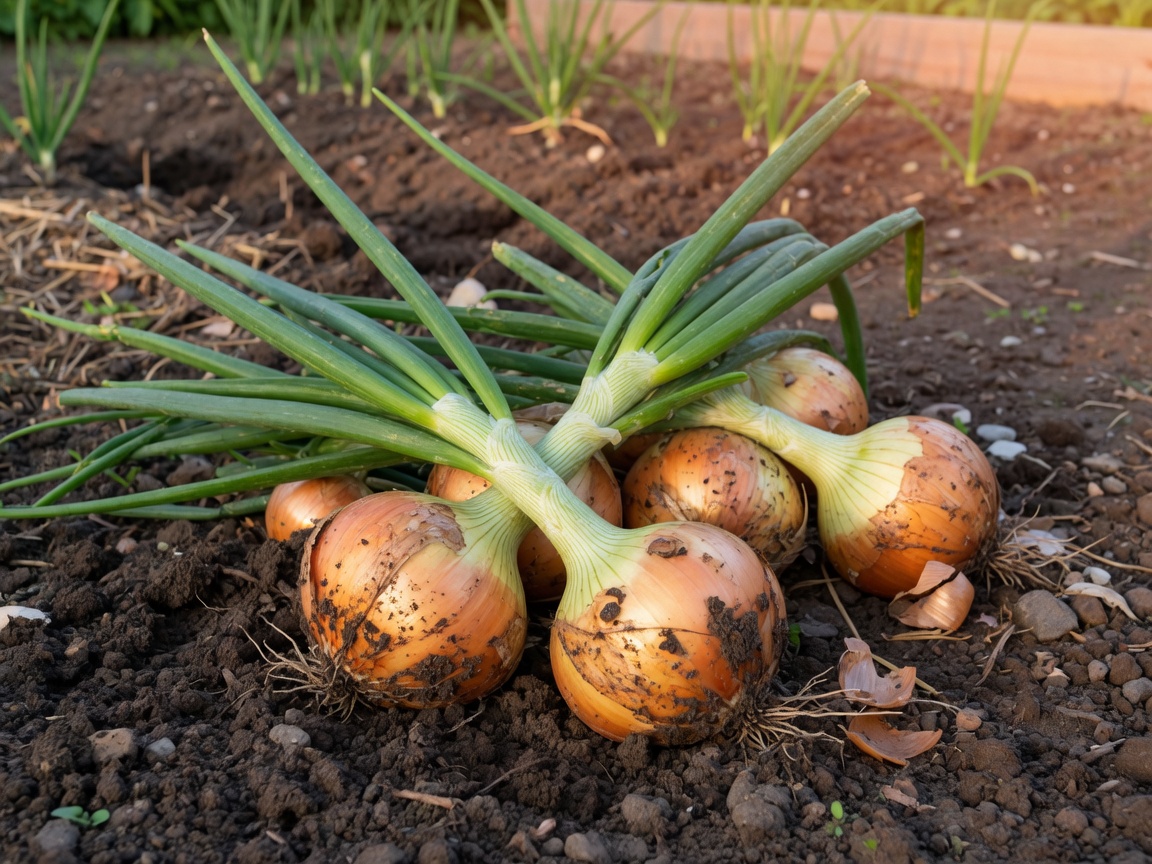
When tops fall naturally, stop heavy irrigation, lift bulbs, and cure in a dry, airy place until necks are dry and skins rustle. Cure is not optional decoration; it is storage insurance in a climate that can still throw warm days after harvest.
Kennewick spring is earlier and drier than westside gardens -- that helps onion establishment if you actually irrigate and weed. Summer heat finishes bulbs well when water is managed and day-length genetics are correct.
Top ways people mess this up
- Wrong day-length. Short-day types stay tiny forever. Read the packet like it matters -- because it does.
- Weed surrender. Onions lose like a folding chair versus a linebacker.
- Skip the cure. Garage rot science project. Cure is production step final.
- Late heavy nitrogen. Soft necks and poor storage. Feed early; finish clean.
Field notes
- Bulbing is day-length triggered; canopy size at induction predicts bulb size.
- Long-day default for Kennewick latitudes -- verify packet class before purchase.
- Shallow roots mean weed control and even moisture dominate outcomes.
- Late heavy N can delay maturity and hurt storage quality.
- Dry Basin air helps curing if bulbs are shaded and ventilated -- not baked on hot pavement.
Crop biology
Bulb onions (Allium cepa) partition the season into leaf production, then bulbing triggered primarily by photoperiod (with temperature modulation). At Kennewick latitudes, long-day types initiate bulbs as day length stretches; short-day types adapted to southern winters often never receive the signal they expect and remain scallion-scale. Larger leaf canopy at induction generally means larger bulbs -- early weed-free growth is yield formation, not busywork.
Sunlight & airflow
Full sun. Dense weed shade is a yield killer. Good airflow around curing racks matters postharvest; in the field, spacing that allows drying after irrigation reduces foliar disease risk.
Soil
Loose, fertile, well-drained soil with compost. Target pH roughly 6.0-7.0. Stones and hard clods deform bulbs. Basin soils with low organic matter need compost for water holding and nutrient buffering. Avoid waterlogged spots that invite basal rot.
Irrigation
About 1 inch per week during active leaf growth, adjusted for heat and wind. Shallow roots mean the top soil must not swing wildly. As tops fall and necks soften, reduce water so bulbs can dry down for cure. Late heavy irrigation invites thick necks and storage losses.
Fertilizer
Nitrogen supports early canopy; phosphorus and potassium should be adequate from soil/compost. Ease N as bulbing finishes. Excess late fertility delays maturity. Side-dress early if leaves are pale and growth is slow -- after confirming moisture.
Kennewick / Columbia Basin timing
- Plant sets/transplants: March to early April as soil works.
- Optional seed start: January-February indoors for transplants (advanced path).
- Leaf push: spring into early summer under irrigation.
- Bulb finish / tops down: often July to September depending on type and planting date.
- Cure: immediately after lift, until necks dry -- then store cool and dry.
Training, pruning & disease hygiene
No pruning ritual -- weed and thin instead. Remove plants with severe rot. Do not compost obviously diseased bulbs into next year's onion ground if you can help it. Keep foliage dry when possible; drip beats overhead.
Pests & disorders
Thrips in hot dry weather, maggots in some soils/histories, fungal neck and basal issues under wet curing or poor drainage, and bolting if temperature/day-length stress hits certain plantings. Weed pressure is the everyday antagonist. See pests.
Harvest & postharvest
Lift when most tops are down. Field-dry briefly if weather is dry, then cure in shade with airflow until necks are tight and skins rustle. Store cool, dry, ventilated. Soft thick necks: eat first. Do not store wet bulbs in plastic bags as a science fair on mold.
Unit close
Correct day-length, early full-sun canopy, even water, timed nitrogen, cure dry, store cool. Genetics first -- culture second -- cure always.