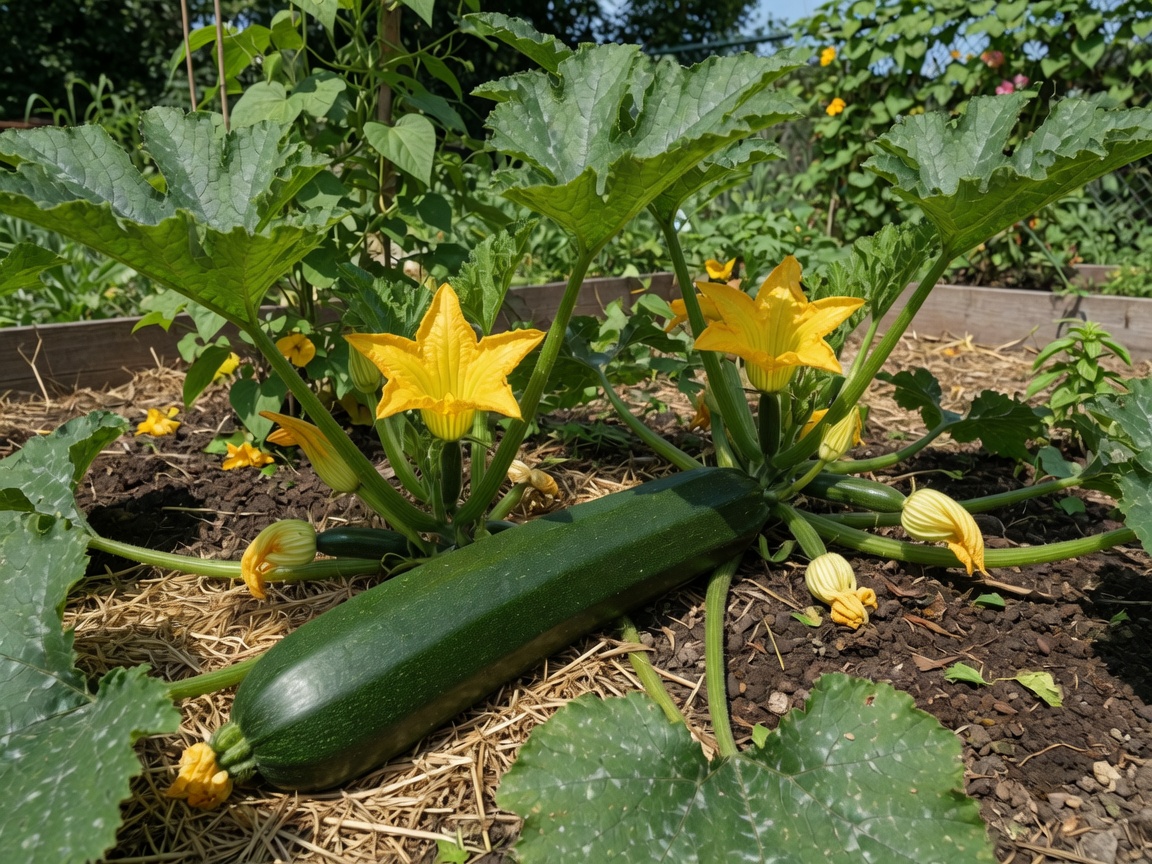
The short checklist
- When: Soil about 60F; late April through June. Cold wet seedbeds rot optimism.
- Sun: Full sun. Kennewick delivers.
- Soil: Heavy compost -- this is a hungry, thirsty plant.
- Water: Deep soaks about 1-2 inches per week while fruiting; more in extreme heat.
- Space: 24-36 inches for bush types. One plant is a relationship; two is a hostage situation.
- Harvest: 6-8 inch fruits; check every 1-2 days or enjoy baseball bats.
How to actually do this
Sow directly into warm soil or transplant carefully (cucurbits resent root disturbance). Water at the root zone, mulch, and do not plant a militia "just in case." Basin heat pushes fruit fast -- harvest discipline is the crop.
First flowers may abort in cool weather or before pollinators find you; do not panic on day four. Hand-pick squash bug eggs early on leaf undersides. Deep irrigation beats sprinkle theater that leaves shallow roots to collapse in the first heat wave.
Miss two days at peak and fruits need their own ZIP code, suppressing new set while you invent zucchini boat recipes for strangers.
Top ways people mess this up
- Just-in-case army of six. Reverse-burglary on neighbors porches by August.
- Sprinkle theater. Shallow roots collapse in the first heat wave.
- Hide-and-seek harvest. Miss two days and it needs its own ZIP code.
- Ignoring squash bugs early. Eggs are easier than a full occupation.
Field notes
- Monoecious: males often first; early abort can be temperature or pollinator limited.
- Fruiting plants are high water and nutrient sinks -- shallow watering fails in July.
- Powdery mildew common late; airflow helps, accept end-cycle decline.
- Plant number is a logistics problem, not a personality test.
- Rapid fruit expansion means harvest interval is yield quality control.
Crop biology
Cucurbita pepo summer squash produces separate male and female flowers. Early male-heavy flushes are normal. Fruit expands rapidly after pollination; oversized fruits become strong sinks that suppress new set and quality. Powdery mildew and insect pressure often define late-season decline more than calendar date alone.
Sunlight & airflow
Full sun. Space plants so leaves dry after irrigation and morning dew. Crowding plus overhead water invites mildew and soft rot under dense canopies. Basin wind can desiccate leaves if roots are dry -- mulch and deep water fix the real problem.
Soil
Fertile, compost-rich, drained soil. Work organic matter deep. pH roughly 6.0-7.5 is workable. Raised beds help drainage on heavy spots. Avoid planting into cold, saturated ground.
Irrigation
Deep soaks while fruiting -- about 1-2 inches weekly, more under high ET. Drip under mulch is ideal. Fruit quality (bitterness, tip issues, abortion) tracks water stress. Do not rely on Kennewick rainfall in July. It will not write you back.
Fertilizer
Compost pre-plant. Side-dress if plants pale under heavy fruit load. Excess nitrogen without water still fails. Balanced fertility supports continuous set; feast-famine is how you get leafy monsters and odd fruit.
Kennewick / Columbia Basin timing
- Sow/transplant: late April through June when soil is warm (~60F+).
- Optional indoor start: 2-3 weeks only -- larger transplants sulk.
- Harvest: often June into October depending on planting and frost.
- Peak: July-August -- daily checks.
- End: mildew, bugs, or frost; clear diseased debris.
Training, pruning & disease hygiene
Remove severely mildewed leaves if airflow improves; do not strip the plant naked into sunscald. Remove rotting fruit. At season end, dispose of heavily infested material thoughtfully. Scout undersides of leaves weekly for squash bug eggs and crush early.
Deeper: harvest interval economics
Leaving oversized fruit on the plant is not "getting more food" -- it is diverting assimilate into a low-quality sink while aborting younger fruit. The kitchen tax of daily harvest is the yield system.
Pests & disorders
Squash bugs, cucumber beetles (virus/wilt risk in some years), powdery mildew, blossom abort from heat/water/pollination gaps. Handpick and sanitation first. See pests.
Harvest & postharvest
Cut 6-8 inch fruits with a knife or snips. Refrigerate short-term. Giant clubs are compost or stuffed-boat material. Peak season: every 1-2 days without apology.
Unit close
Warm soil, one or two plants, deep water, daily harvest. Abundance is the feature and the tax.